Netherlands vs Sweden FIFA World Cup 2026 – Momentum Analysis & Matchday Hype | Who Holds the Psychological Edge?
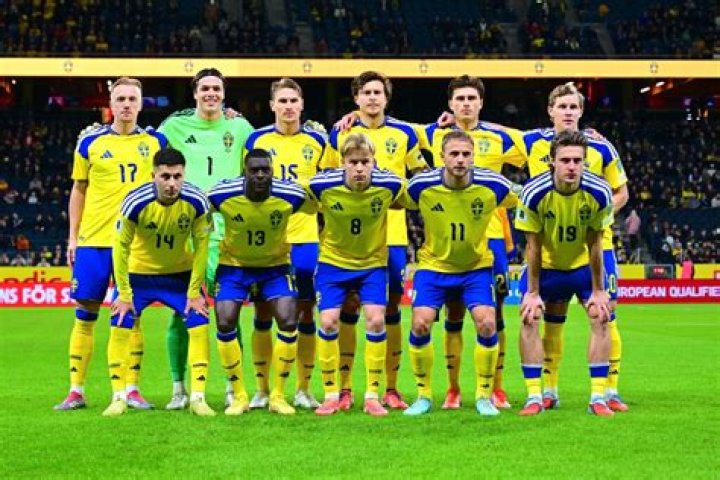
Netherlands vs Sweden is shaping up to be one of the most compelling fixtures of FIFA World Cup 2026 Group F, and if you have been watching the form charts of both nations with any serious attention over recent months, you already know this is far more than a standard international encounter. The momentum each side carries into this matchday tells a story that statistics alone cannot fully capture — it is a story of resurgence, of relentless qualifying hunger, and of two footballing nations who have arrived at this global stage through very different emotional journeys.
The Dutch Machine: A Qualifying Juggernaut in Full Flow
Let us not dance around it — the Netherlands have been on a tear. Strip back everything and look purely at what Ronald Koeman's side has done inside the UEFA World Cup Qualifying Group G campaign, and the picture that emerges is one of a team firing on every cylinder that matters.
They opened their qualifying account with a composed 2-0 away victory in Finland, immediately signalling intent. That was followed by a ruthless 8-0 demolition of Malta at home — a scoreline that did not just earn three points but sent a psychological thunderbolt across the entire group. They then recorded a hard-fought 3-2 victory in Lithuania, proving that even when the going gets uncomfortable on the road, this Dutch side knows how to close out results.
The reverse fixtures only intensified the narrative. Malta was put to the sword once more, this time 4-0 away from home. Finland was swatted aside 4-0. Lithuania were beaten 4-0 at home. The Netherlands concluded their qualifying sequence with back-to-back 1-1 draws against Poland — results that, while not flashy, underlined a calculated approach from a team that had already mathematically secured their passage.
Reading Between the Lines of Netherlands' Form
What makes the Dutch momentum so compelling is not simply the volume of victories — it is the manner and the context in which they arrived. Between the two Poland stalemates, the Netherlands hosted and beat Finland 4-0 and Lithuania 4-0 in succession. That is not a team going through the motions. That is a team with a settled structure, a functioning attack, and a squad that understands exactly what is required at every level of competition.
Their wider recent history adds even more texture. At Euro 2024, they navigated all the way to the semi-finals — beating Romania 3-0, seeing off Türkiye 2-1 — before an agonising 2-1 reverse against England ended their campaign. That tournament experience, that familiarity with pressure stages and knockout football, is now embedded in this squad's collective DNA heading into World Cup group play.
The Nations League cycle told a similarly nuanced tale. A stunning 5-2 win over Bosnia and Herzegovina, a 2-2 draw with Germany, a 4-0 thrashing of Hungary — these are results that speak of a team that can shift gears at will. Even the Nations League Finals penalty shootout thriller against Spain, which ended 8-7 on spot kicks following a 2-2 draw, demonstrated ice-cold nerve under the most intense possible scrutiny. This squad has been forged in high-pressure moments. They do not wilt. They lean into it.
Their most recent pre-tournament outings further cement the picture. A 2-1 friendly win over Norway. A 2-1 victory over Uzbekistan. Even a narrow 0-1 friendly loss to Algeria — a rare blemish — could not dent the overarching sense of a squad peaking at precisely the right moment. Coming into the World Cup group stage, the Netherlands have the look of a team that is not merely participating — they are hunting.
Sweden's Road to the World Cup: Grit, Drama, and a Playoff Redemption
Sweden's path to FIFA World Cup 2026 was a fundamentally different kind of journey, and that difference matters enormously when we assess the psychological state of each side. Where the Netherlands qualified with something approaching clinical authority, the Swedes had to fight for their lives through the UEFA Playoff route — and that experience carries its own double-edged psychological weight.
In the playoffs, Sweden delivered back-to-back performances that will live long in the memory of their supporters. A dominant 3-1 away victory over Ukraine in the first leg, followed by a 3-2 win over Poland in the decisive final — converting from a home platform after the Dutch had done their part comfortably in qualification. These are not the results of a team in crisis. These are the results of a team that has rediscovered its competitive spine at exactly the right moment.
Digging Into Sweden's Qualifying Turbulence
But let us be honest about the road that led Sweden to those playoff heroics. Their World Cup Qualifying Group B campaign was one of persistent inconsistency. They drew 2-2 with Slovenia, then lost 2-0 to Kosovo at home — a damaging result. A 2-0 loss to Switzerland followed in the third match. They then lost to Kosovo again, this time 1-0 on the road. The Switzerland reverse fixture brought another defeat, 4-1. Even the final group fixture — a 1-1 home draw with Slovenia — was not exactly the kind of statement performance that instils confidence ahead of a World Cup group stage.
In six qualifying group matches, Sweden won zero times. They drew twice and lost four. That is a record that places immediate context around the playoff heroics — and raises legitimate questions about how repeatable those two excellent performances actually were versus the underlying form trajectory.
The wider recent record tells a similarly mixed story. In friendly competition, Sweden beat Hungary 2-0 in June, then edged a dramatic 4-3 victory over Algeria in a match that should perhaps not have been as close as it was. They comfortably handled Northern Ireland 5-1 and beat Luxembourg 1-0. But they also absorbed a 3-1 loss to Norway in a June friendly and drew 2-2 with Greece just days before the tournament. The Nations League cycle brought wins but also exposed defensive vulnerabilities — most sharply illustrated by the 3-0 Nations League loss at home to Serbia.
Head-to-Head Psychological Ledger: Who Blinks First?
When we place these two form profiles directly alongside each other and ask the question every serious football analyst and matchday punter wants answered — who carries the stronger psychological advantage into this FIFA World Cup Group F encounter — the answer leans decisively toward the Netherlands, and here is the specific reasoning behind that verdict.
The Dutch have not only been winning more frequently, they have been winning in dominant fashion against multiple levels of opposition. Their ability to sustain a 4-0 or 8-0 scoreline in qualifying is not merely about goal difference arithmetic — it reflects an attacking confidence and a defensive discipline that operates well above the level of anxiety. Teams that score eight goals in a competitive fixture, then back that up with two further 4-0 victories, are functioning from a place of deep psychological security.
Sweden, by contrast, have only recently rediscovered that security. The playoff victories over Ukraine and Poland were brilliant, but they arrived after a six-game qualifying group campaign without a single win. That is an emotional rollercoaster — inspiring in its resolution but potentially draining in its cumulative effect. The psychological demand of having to survive elimination pressure twice before you even arrive at the tournament is a cost that rarely appears in the form table but almost always surfaces at some point during group play.
Streak Comparison: The Numbers That Define Matchday Edge
In their last ten competitive and semi-competitive outings, the Netherlands registered seven wins, two draws, and just one defeat. That defeat — the 0-1 friendly loss to Algeria — was an isolated result in a low-stakes context. Strip it out and the Dutch have effectively been rolling through opponents with an efficiency that is rare at any level of international football.
Sweden's last ten fixtures tell a more complicated story: four wins, two draws, and four losses. In isolation, four wins from ten sounds reasonable enough for a team preparing for a World Cup. But the nature of those losses — to Kosovo twice, to Switzerland, and to Norway — reveals a team that still has unresolved vulnerabilities, both tactically and mentally, against sides operating at or near their own competitive level.
This is the crux of the psychological advantage equation. The Netherlands have been beating opponents of varying quality with consistent authority. Sweden have been inconsistent against opponents they should be handling. When you project both of those trajectories into a World Cup group stage fixture, the momentum arrow points unmistakably toward the Dutch.
The Matchday Atmosphere and What It Means for Sweden
There is one final layer to this momentum analysis that deserves its own space in the conversation: the intangible weight of World Cup football for a squad that nearly did not make it. Sweden's players will arrive at this fixture knowing they were on the brink of missing the tournament entirely — and that knowledge, depending on the character of the dressing room, can either supercharge performance or introduce a subtle but destructive undercurrent of pressure that good teams exploit.
The Netherlands, fresh from a Euro 2024 semi-final run and a qualifying campaign that never once looked uncertain, carry none of that freight. They are a team at ease with their own identity, with clear tactical blueprints and the big-game experience to execute under scrutiny. Xavi Simons, Cody Gakpo, Virgil van Dijk — these are not players who need time to settle into tournament football. They have been living in it for the better part of two years.
Final Verdict: Netherlands Hold the Psychological High Ground
Every momentum indicator available from the last_matches data — winning streak depth, margin of victory, qualifying campaign authority, recent form against comparable opposition, and big-match experience — places the Netherlands in a position of clear psychological dominance heading into this FIFA World Cup 2026 Group F clash against Sweden.
Sweden are not here to make up the numbers. Their playoff run proved they have the quality and the resolve to compete at this level when everything is on the line. But competing when your back is against the wall is a very different proposition from dictating the terms of a match from a position of strength and momentum — and right now, that position belongs firmly to the Netherlands.
This is the kind of fixture where form, confidence, and accumulated psychological capital tend to tell. And on all three of those fronts, the Dutch arrive on matchday with a hand that Sweden — for all their recent drama and resilience — will find extremely difficult to beat. Follow every moment of the action live at worldcup2026.fsb.gov.ng, your destination for World Cup 2026 coverage, analysis, and real-time match updates.
