Mexico vs South Korea Lineup Impact: How Formations & Substitutions Decided the FIFA World Cup 2026 Match
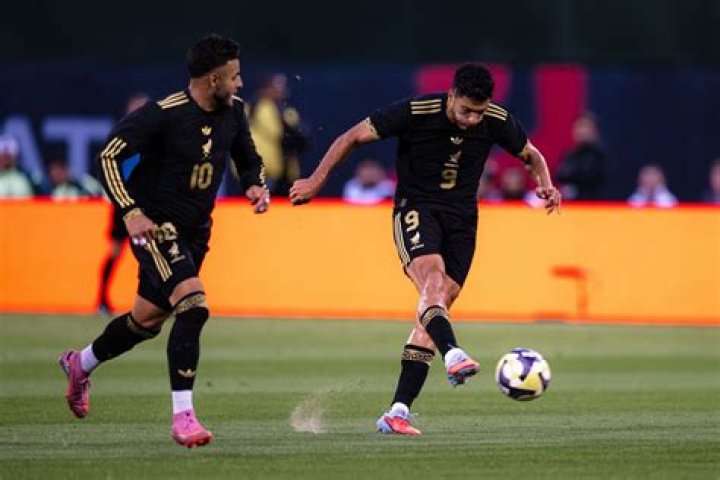
Mexico vs South Korea delivered one of the most tactically absorbing encounters of the FIFA World Cup 2026 group stage — a match where the dugout decisions proved every bit as decisive as the moments of individual brilliance on the pitch. Javier Aguirre's El Tri lined up in a disciplined 4-3-3, while Myung Bo Hong's Taegeuk Warriors responded with a bold, asymmetric 3-4-2-1. What followed was ninety minutes of chess, pressure, and nerve-shredding tension — with a single goal separating two nations locked in a war of tactical will.
The Formations Decoded: Two Philosophies Collide
Before a single boot struck the turf, the formation sheets told a story. Aguirre sent his men out in a 4-3-3 — a structure built for controlled aggression, wide stretching, and midfield compactness. Across the halfway line, Hong countered with a 3-4-2-1, a system that promised defensive solidity at its spine while unleashing creative energy through its twin number tens. These were not merely tactical selections — they were declarations of intent, chess moves made before the clock even started ticking.
Mexico's 4-3-3: The Architecture of Controlled Pressure
Javier Aguirre constructed his 4-3-3 with a quiet ruthlessness. At its back, a four-man defensive line anchored by captain Edson Álvarez — rated at 7.3 — who was nothing short of colossal. Álvarez touched the ball a breathtaking 90 times across the full 90 minutes, completing 71 of 78 passes attempted, producing 5 clearances, 2 tackles, and 2 interceptions. He was not merely a defender — he was El Tri's heartbeat, the metronome around whom everything pulsed and breathed.
Flanking Álvarez in central defence, Johan Vásquez provided composure on the ball (54 touches, 47 accurate passes), while Julián Gallardo at left back was a constant menace — 67 touches, 2 key crosses, 2 tackles, and 5 clearances gave Mexico a dangerous left corridor that South Korea struggled to police. On the right, Jorge Sánchez kept things compact and disciplined, completing 25 of 27 passes with one crucial interception.
In the engine room — the very soul of this 4-3-3 — three midfielders rotated responsibility with calculated precision. Luis Romo, rated the highest outfield player on either team at an extraordinary 8.0, was a revelation. Operating as a box-to-box force, he scored the decisive goal, completed 32 of 37 passes, produced 4 tackles, 1 interception, and won an astonishing 7 individual duels. He was everywhere — simultaneously the sword and the shield. Alongside him, Bryan Gutiérrez threaded key passes through tight spaces (rating 7.2, 15 accurate passes, 1 key pass) before being withdrawn, while Érick Lira covered ground relentlessly with 49 passes and 7 ball recoveries over the full 90.
Up front, Aguirre's 4-3-3 required his forward trio to press high, stretch the Korean back three, and create chaos in wide zones. Roberto Alvarado did exactly that — 2 crosses, 1 key pass, 3 clearances in a defensive sense — before being replaced. Raúl Jiménez, the veteran striker, battled tirelessly under 9 duels (winning 3), holding up play and drawing South Korea's central defenders deep. Julián Quiñones on the other flank contributed 2 key passes and constant rotational movement that stretched Korean defensive lines to their absolute limits.
South Korea's 3-4-2-1: The Brave But Flawed Gamble
Myung Bo Hong chose the daring path. His 3-4-2-1 presented a back three of Kim Min-jae, Gim Lee, and Hyun Lee — a trio that collectively dominated possession statistics but ultimately cracked under the persistent Mexican press. Kim Min-jae was commanding: 102 touches — the single highest of any player on the pitch — 97 passing attempts, 91 accurate, 2 tackles, and 5 recoveries. His presence in the back line was the one constant in South Korea's defensive architecture, but even his authority could not prevent Mexico from finding the decisive breakthrough.
The wide midfield pairing of Ki Lee and Young-woon Seol was tasked with providing both defensive width and attacking thrust — a dual demand that ultimately stretched them thin. Ki Lee (rating 6.9) was arguably South Korea's most industrious outfield performer with 71 touches, 3 key passes, and 5 duels won — a relentless worker who carried the weight of his team's attacking ambition. Seol, however, was less impactful before his withdrawal at 71 minutes — 42 touches, 23 accurate passes, and just 1 shot registered a performance that spoke of unfulfilled potential.
The twin number tens — Son Heung-min and Jae-sung Lee — were the architects of South Korea's creative hope, but both were hauled off before the hour mark at just 57 minutes played. Heung-min, the captain and talisman, managed only 21 touches, 11 accurate passes, and 1 key pass before his premature departure extinguished the flame of Korean attacking threat. His withdrawal was the pivotal moment — the point at which the match's balance tipped irrevocably toward Mexico. Lee, meanwhile, registered 25 passes and 4 tackles — an anomaly that spoke to how deep the Koreans were being forced to defend.
Goalkeeper Kim Seung-gyu made 3 saves and denied 2 shots from inside the box — a genuine last line of resistance in a match where his team's 3-4-2-1 framework increasingly struggled to provide him the protection it promised.
The Substitution Battleground: Where Aguirre Won the Tactical War
If formations set the stage, it was substitutions that wrote the ending — and here, the contrast between the two dugouts was staggering.
Mexico's Substitutes: Composure Bottled and Deployed
Aguirre made his changes with a sniper's precision. At the 71st minute, with the match hanging on a knife's edge, he withdrew both Luis Romo (rated 8.0) and Bryan Gutiérrez (rated 7.2) — the pair who had dominated proceedings. In came Orbelin Pineda and Ozziel Vargas, tasked not with sparking something new, but with protecting what already existed. Pineda, in just 19 minutes, contributed 1 key pass and 1 clearance — modest numbers, but disciplined ones. Vargas added 5 ball recoveries in the same brief window, a number that underlines how effectively he shut down Korean late surges.
At the 80th minute, Roberto Alvarado and Raúl Jiménez were replaced by César Huerta and Sebastián Giménez. Huerta — on for just 13 minutes — won 1 duel and made 1 recovery, providing fresh legs in the press. Giménez, despite only 10 minutes on the pitch, showed enough tenacity in aerial duels to suggest his introduction was designed to hold the ball and relieve pressure in the final chaotic stretch. Late on, Israel Reyes entered for defensive reinforcement — 1 tackle, 1 interception, 2 duels in 10 minutes — exactly the solidity Aguirre demanded as South Korea pressed desperately for an equaliser.
South Korea's Substitutes: Too Little, Too Late
For Hong, the substitution story is one of urgency miscalculated. The simultaneous removal of both Son Heung-min and Jae-sung Lee at just 57 minutes — before the match had reached its most combustible phase — stripped South Korea of their most creative forces precisely when creative solutions were needed most. In came Hwang Hee-chan and H. Oh, who together managed just 33 minutes, 1 shot, and modest passing returns between them. The injection of energy was visible, but the loss of Son's vision and Lee's tactical intelligence left a void that neither substitute could convincingly fill.
The most impressive Korean substitute was unquestionably Jeong Eom, who arrived at the 71st minute and immediately registered 1 key pass, 2 key crosses, 2 duels won, and a rating of 7.2 in just 19 minutes — comfortably the best substitute performance on either side. His introduction gave South Korea a late flickering of hope, but it arrived too late to alter the narrative that had already been written. Yang Hyun-Jun added 1 shot and 3 tackles in his 19-minute cameo — energetic and willing — but Mexico's defensive structure, reinforced so shrewdly by Aguirre, did not yield.
Deep substitute Cho Gue-sung entered for the final 13 minutes with South Korea chasing parity, registering 2 shots in a desperate flurry — but both were swallowed up by a Mexican defensive unit that had been drilled into an impenetrable late-game shape by their canny manager.
Formation Verdict: How the 4-3-3 Strangled the 3-4-2-1
The 4-3-3's midfield triangle proved to be the decisive structural advantage of this match. Mexico's three central midfielders — particularly Romo — could outnumber South Korea's two central midfielders at any given moment, creating a carousel of pressure that denied the Koreans clean ball in transition. The wide forwards of El Tri's attack simultaneously pinned South Korea's wing backs back, preventing them from joining attacking moves with any consistency.
South Korea's 3-4-2-1, by contrast, required its wing backs and twin tens to function in perfect harmony — a harmony disrupted by Mexico's press from the very first whistle. Without Son and Lee operating in full flow for the complete 90 minutes, the system never achieved the fluid connectivity that makes it so devastating at its best. The back three of Min-jae, G. Lee, and H. Lee produced impressive possession numbers — but possession without penetration is simply deferred suffering.
The Goal That Defined Everything
Luis Romo's strike — the solitary goal of this encounter, registered alongside his 8.0 match rating — was not merely a moment of individual brilliance. It was the inevitable product of a formation that channelled his energy, protected his runs, and gave him the license to arrive with force. In a 4-3-3 that breathed through Álvarez's leadership and exploded through Romo's dynamism, Mexico found exactly the formula required to navigate a night of immense pressure and deliver a result that sends a declaration across the FIFA World Cup 2026 horizon.
For South Korea, the lessons are painful but instructive. A braver substitution policy — one that kept Son Heung-min on the pitch into the final quarter — might have rewritten this story entirely. Instead, two bold formations met, two coaches gambled with their selections, and on this occasion, it was Javier Aguirre's hand that proved the steadier, the wiser, and ultimately the winning one.
