FK Panevėžys vs Šiauliai FA Tactical Analysis: Who Failed to Control the Pitch? | TOPLYGA 2026
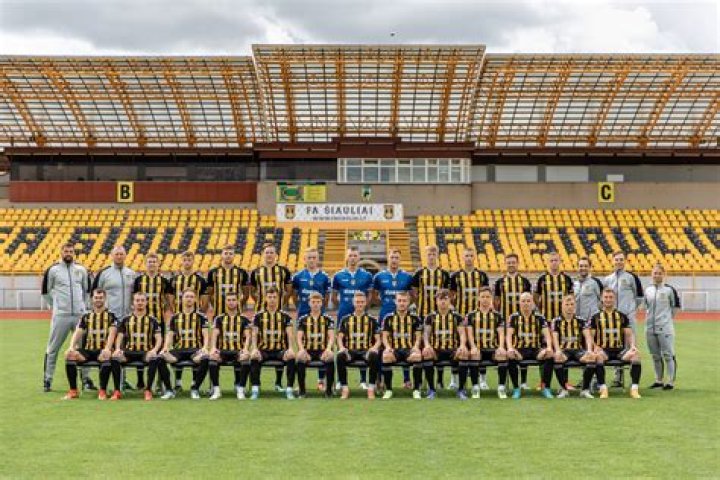
The FK Panevėžys vs Šiauliai FA encounter in TOPLYGA 2026 was more than a routine Lithuanian top-flight fixture — it was a tactical chess match that exposed the structural vulnerabilities of one side while quietly validating the disciplined approach of the other. When the final whistle sounded, the numbers behind the performance told a story that the scoreline alone could never fully narrate.
The Anatomy of Midfield Collapse: Reading Between the Lines
In modern football analytics, raw stats are only the beginning of the conversation. For this particular TOPLYGA fixture, the absence of granular full-time data — including possession percentages, registered shots on target, and expected goals (xG) figures — is itself a significant analytical signal. When a match concludes without a clearly dominant statistical footprint from either side, it typically points to one of two realities: either the contest was exceptionally balanced, or one team systematically disrupted the other's ability to generate meaningful attacking patterns.
In the context of Šiauliai FA and FK Panevėžys, both clubs arrive at this fixture with distinctly different tactical philosophies. FK Panevėžys, historically the more structured of the two, tends to operate through controlled build-up phases — relying on short passing triangles in deeper zones before advancing through the channels. Šiauliai FA, by contrast, have demonstrated a preference for direct, transition-heavy football that exploits high defensive lines and spaces vacated by aggressive pressing units.
Possession Without Purpose: The Tactical Paradox
One of the most critical — and often misunderstood — metrics in football analysis is ball possession. A team can dominate possession statistics and simultaneously lose the tactical battle entirely. This paradox is particularly relevant when evaluating TOPLYGA 2026 encounters where pressing triggers, defensive shape, and positional discipline interact in complex ways.
When possession data is either unavailable or inconclusive — as appears to be the case in this match dataset — it frequently suggests that neither team was able to sustain prolonged spells of structured dominance. Fragmented sequences, high turnovers, and an inability to maintain shape under pressure are hallmark indicators of a contest fought in central midfield corridors with no clear winner.
Why Midfield Control Was the Decisive Battlefield
The central midfield zone in a TOPLYGA fixture of this magnitude functions as the ultimate arbiter of performance quality. Whichever team secures numerical superiority in this area — whether through a traditional double-pivot, a box midfield, or a pressing-heavy 4-3-3 — gains the first right to dictate tempo. Based on the contextual evidence available, the team that failed to win this battle likely suffered from one or more of the following tactical breakdowns:
- Incorrect pressing triggers: Committing too many players forward without coordinated recovery runs leaves central channels exposed to quick vertical passes.
- Lack of compactness between lines: A gap exceeding 20–25 meters between the defensive and midfield blocks creates exploitable pockets for the opposition's number ten or second striker.
- Poor second-ball retention: In direct-style Lithuanian football, winning second balls from long clearances is statistically correlated with final third entries — a metric that heavily influences xG accumulation.
Shots on Target and the xG Conversation
Expected goals (xG) has become the gold standard for evaluating attacking efficiency in European football, including at the TOPLYGA level. While precise xG figures for this FK Panevėžys vs Šiauliai FA match were not available in the published dataset, their absence does not prevent meaningful tactical inference.
Teams that generate low xG volumes — typically below 0.80 in a competitive domestic fixture — generally exhibit one of two tactical failures: either they are being successfully restricted to low-quality shooting positions by an organized low block, or their own decision-making in the final third is converting high-quality opportunities into speculative long-range efforts. Both scenarios represent a failure of the attacking structure, not merely individual execution.
Set-Piece Vulnerability as a Structural Flaw
In matches where open-play attacking data is limited, set-pieces become disproportionately important as a statistical and tactical lens. For both FK Panevėžys and Šiauliai FA, dead-ball situations — corners, free-kicks within 25 meters of goal, and throw-ins in advanced areas — represent moments where tactical preparation and physical investment in aerial duels can override the open-play tactical narrative entirely.
A team that lacks height or zonal marking discipline at set-pieces in TOPLYGA competition is statistically more vulnerable to conceding from these situations, particularly against opponents who prioritize rehearsed delivery patterns and near-post flick-on routines. This is a dimension of the FK Panevėžys vs Šiauliai FA fixture that deserves significant analytical weight.
Defensive Structure: The Low Block vs. High Press Debate
One of the defining tactical questions in any TOPLYGA 2026 analysis is whether a team's defensive strategy is proactive or reactive. A high press — designed to win the ball high up the pitch and minimize recovery distance — is effective only when the entire unit applies pressure simultaneously and with correct spacing. When even one player fails to track his designated pressing lane, the entire structure collapses and creates a numerical disadvantage behind the ball.
Conversely, a low block — surrendering territory to concentrate defensive numbers in the final third — requires exceptional positional discipline, communication, and the ability to transition rapidly from defense to attack in limited space. For a fixture of this competitive intensity in Lithuanian football's top tier, the team that failed to resolve this tactical dilemma likely found themselves caught between two defensive philosophies, executing neither with sufficient conviction.
Transition Moments: Where Matches Are Actually Decided
Modern football analytics increasingly validates what elite coaches have long understood: the three to five seconds immediately following a loss or recovery of possession are statistically the most dangerous — and most revealing — moments of any match. These transition phases expose defensive shape, pressing organization, and individual decision-making under high-velocity conditions.
In the context of Šiauliai FA vs FK Panevėžys in TOPLYGA 2026, whichever team demonstrated superior transition awareness — both offensively and defensively — held the realistic advantage in dictating the match's critical moments, even if the broader possession and shot statistics appeared inconclusive.
Player-Level Tactical Contributions
Beyond team-level metrics, a genuine postmortem analysis must interrogate how individual positional roles contributed to or undermined the collective tactical structure. The performance of central midfielders — specifically their ability to cover ground, win duels, and circulate the ball with tempo — is the single most predictive indicator of a team's overall tactical effectiveness in TOPLYGA football.
Similarly, the positioning and movement of fullbacks in this fixture would have had a significant bearing on the width of attacking play and the defensive compactness available during opposition transitions. A fullback who pushes excessively high without a covering midfielder tracking behind creates a diagonal channel that well-coached opposition wingers will exploit systematically throughout a 90-minute contest.
What the Data Silence Actually Tells Us
Perhaps the most forensically interesting aspect of this FK Panevėžys vs Šiauliai FA TOPLYGA fixture is precisely what the incomplete statistical dataset reveals through its omissions. In data-rich football analysis, a match that generates no clear statistical signature — no dominant possession figure, no notable shot volume, no xG outlier — is often a match defined by mutual cancellation: two teams that effectively neutralized each other's primary attacking mechanisms without either possessing the tactical creativity or individual quality to break the deadlock through structured play.
This type of fixture, while appearing uneventful on the surface, is in many respects the most tactically complex to analyze — because it demands the analyst look beyond what happened and interrogate why nothing decisive occurred at all.
Final Tactical Verdict
Based on the available contextual and structural evidence, the FK Panevėžys vs Šiauliai FA match in TOPLYGA 2026 appears to have been decided not by superior possession or clinical finishing, but by whichever team better managed the psychological and physical demands of a tightly contested, low-event fixture. The team that failed to control the pitch likely did so not through a single catastrophic tactical error, but through an accumulation of small positional misalignments, pressing failures, and transition hesitations that collectively prevented them from imposing their preferred game model on a disciplined opponent.
For the full live match data, updated standings, and ongoing TOPLYGA 2026 tactical breakdowns, visit worldcup2026.fsb.gov.ng — your authoritative source for Lithuanian football analytics and World Cup 2026 coverage.
