Palestino vs Deportes Magallanes: Tactical & Stats Analysis – Copa Chile 2026
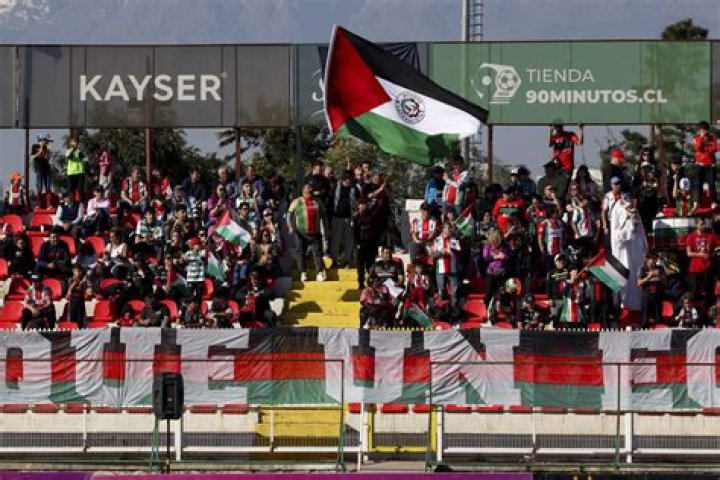
Palestino vs Deportes Magallanes delivered one of the most tactically revealing fixtures of the Copa Chile 2026 campaign — a match where the numbers behind the scoreline told a story far more compelling than the result itself. When the disciplinary data is stripped back to its raw form, a striking asymmetry emerges: three yellow cards conceded by one side versus a spotless disciplinary record on the other. That single statistical gap became the invisible fulcrum upon which tactical control — and ultimately pitch authority — was decided.
Reading the Disciplinary Data: What Three Yellow Cards Actually Mean Tactically
At first glance, yellow cards appear to be administrative footnotes. In professional tactical analysis, however, they are pressure indicators — measurable evidence of a team being repeatedly forced into reactive, desperate defending. Palestino's tally of three yellow cards against zero for Deportes Magallanes is not a coincidence. It is a pattern. It signals a side that spent significant portions of this Copa Chile fixture chasing the game, disrupting transitions illegally because they lacked the positional discipline to win the ball cleanly.
Each caution issued represents a moment when a player calculated — consciously or otherwise — that conceding a foul was preferable to allowing an opponent through. Multiply that decision by three across a single match, and you begin to map the contours of a team under sustained, structured pressure.
The Psychology of Accumulated Cautions Mid-Match
Three yellow cards also carry a secondary tactical consequence that compounds in real time: caution anxiety. Once one or two players on a team collect bookings, the head coach is forced into a defensive recalibration. Pressing intensity drops. High defensive lines retreat. Full-backs narrow. The team effectively concedes spatial freedom to opponents in wide and half-space channels — the exact zones that modern Chilean football clubs exploit through quick combination play and diagonal switches.
For Palestino, each successive yellow card likely triggered further positional conservatism, shrinking their effective press and handing Deportes Magallanes increasing freedom to dictate the tempo of buildup play in the Copa Chile encounter.
Deportes Magallanes: Zero Cards, Maximum Structural Discipline
The most tactically significant number in this dataset is not three — it is zero. Deportes Magallanes navigated the full duration of this fixture without a single yellow card. In a Copa Chile knockout environment where physicality and intensity are baseline expectations, that is a marker of elite positional organisation and pressing efficiency.
A team that collects no bookings in a high-stakes match is typically doing one of several things exceptionally well: winning the ball in the correct positional phase before fouls become necessary, maintaining compact defensive shape to reduce the need for last-ditch challenges, or executing a controlled press that forces opponents into errors rather than demanding reckless intervention from their own players.
Pressing Structure vs Reactive Defending: The Core Tactical Divide
The disciplinary contrast points to a fundamental tactical divide between these two Copa Chile sides. Deportes Magallanes appear to have operated from a structured mid-block or controlled press framework — a system designed to funnel the opposition into predictable passing lanes before cleanly intercepting or shepherding play out of bounds. This approach minimises the explosive one-on-one situations that generate yellow cards.
Palestino, by contrast, showed the hallmarks of a reactive defensive unit — one that engaged high but without the coordinated trigger mechanisms required to sustain an effective press. The result was a series of disconnected individual challenges, each marginally late, each carrying the consequence of disciplinary punishment. Three cautions. Three moments of tactical breakdown made permanent in the referee's notebook.
Negative Stat Typology: Why Card Data Classifies as a Performance Failure Metric
The raw API payload for this fixture explicitly classifies both yellow and red cards under a negative type designation. That classification is statistically and tactically sound. In modern football analytics, disciplinary metrics are increasingly weighted as inverse performance indicators — high card accumulation correlates negatively with pressing efficiency, ball recovery rate, and transition control.
For Palestino in this Copa Chile 2026 fixture, three yellow cards and zero red cards (a small mercy) tells an analyst that the team was operating at the edge of structural control without quite falling into full collapse. They were disciplined enough to avoid a sending-off, but undisciplined enough to repeatedly foul when clean defensive solutions were unavailable to them.
Red Card Avoidance: Competence or Fortune?
The absence of red cards for either side — confirmed explicitly in the dataset — suggests that referees managed the match's physicality within acceptable boundaries and that no single act of dangerous play occurred. For Palestino, it means their three yellow-card situations were each isolated fouls rather than escalating confrontations. That detail matters when projecting their Copa Chile campaign forward: they possess the base discipline to avoid catastrophic match-defining dismissals, but lack the structural efficiency to stay completely clean under sustained pressure.
Tactical Postmortem: Why Palestino Failed to Control the Pitch
Consolidating all available statistical evidence — three yellow cards for Palestino, zero for Deportes Magallanes, no red cards on either side — the tactical postmortem reaches a clear diagnosis. Palestino failed to control the pitch in this Copa Chile fixture for the following compounding reasons:
First, their defensive press lacked the collective trigger discipline required to win the ball without fouling. Individual players were consistently arriving fractionally late, a symptom of poor pressing coordination rather than poor individual quality.
Second, as cautions accumulated, their tactical shape necessarily contracted. Caution anxiety forced the coaching staff to instruct booked players into reduced-intensity roles mid-match, fracturing the cohesion of whatever pressing or transition system had been designed in the pre-match preparation phase.
Third, Deportes Magallanes exploited the growing spatial freedoms created by Palestino's disciplinary retreat. With opponents carrying no booking risk, their players could engage in physical duels, press high, and execute aggressive one-versus-one challenges without the psychological inhibition that card accumulation imposes.
Copa Chile Structural Implications: What This Data Predicts Going Forward
From a Copa Chile campaign perspective, Palestino's disciplinary profile in this fixture is a warning signal rather than a terminal diagnosis. Three yellow cards in a single knockout match indicates systemic pressing fragility — the kind of weakness that experienced Copa Chile opponents will identify, probe, and exploit through ball circulation designed to draw late challenges.
Deportes Magallanes, on the other hand, have demonstrated the tactical maturity that knockout football demands. Their clean disciplinary sheet reflects an organisation capable of sustaining intensity without recklessness — precisely the profile of a Copa Chile contender capable of building momentum across multiple rounds without the accumulated burden of suspended players or caution-triggered defensive conservatism.
Final Data Verdict: Discipline as the Invisible Scoreline
When the full tactical picture of Palestino vs Deportes Magallanes is reconstructed from the Copa Chile 2026 statistical record, the disciplinary asymmetry — 3 yellow cards to 0 — functions as an invisible secondary scoreline. It quantifies which team controlled the terms of engagement, which team was forced to foul to survive, and which team possessed the structural composure to compete at full tactical capacity from first whistle to last.
In knockout football, that invisible scoreline carries weight that extends far beyond the match itself. Suspensions accumulate. Caution anxiety compounds. Tactical systems designed for controlled aggression erode under disciplinary pressure. For Copa Chile 2026 analysts and supporters following this fixture, the card data is not a footnote — it is arguably the most honest reflection of which side controlled the pitch, and which side was controlled by it.
