Oakland Roots SC vs Phoenix Rising FC Tactical Stats Analysis: Why Pitch Control Collapsed in USL Championship 2026
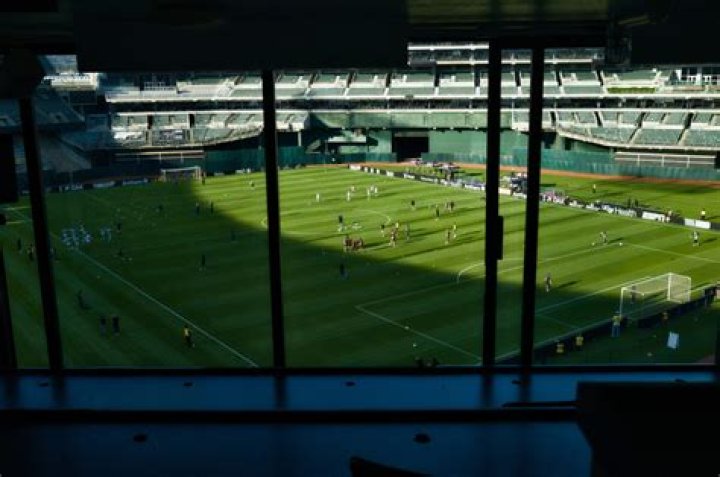
Phoenix Rising FC vs Oakland Roots SC produced the kind of USL Championship numbers that tell a sharper story than possession alone. Phoenix had more of the ball across the match with 52% possession and 436 passes to Oakland’s 393, but control of the pitch was never fully theirs. Oakland generated the more dangerous territory, the better shot volume, the heavier box pressure, and the more repeatable attacking patterns.
Heading: The Possession Trap That Misled Phoenix
Phoenix’s biggest tactical problem was not a lack of possession. It was the type of possession they built. Their 52% share of the ball looked healthy on the surface, especially after a first half in which they held 58% possession and completed 256 accurate passes. But that rhythm did not translate into stable control of the penalty area.
Oakland finished with 18 total shots to Phoenix’s 14, nine shots on target to six, and 14 shots inside the box to Phoenix’s eight. That split matters. Phoenix were able to circulate and enter advanced zones, but Oakland were the side turning territory into penalty-box actions. In tactical terms, Phoenix controlled the route map; Oakland controlled the danger zones.
Heading: Oakland’s Second-Half Surge Changed the Match Geometry
The match tilted decisively after the interval. Oakland moved from 42% first-half possession to 56% in the second half, while their shot count exploded from five before the break to 13 after it. Phoenix, by contrast, dropped from eight first-half shots to six second-half attempts.
This was not just a momentum swing. It was a structural reversal. Oakland increased their final-third entries from 18 to 30 after halftime and produced 10 second-half shots inside the box. Phoenix still had moments, including five second-half shots on target, but they were no longer dictating where the game was played. They were defending deeper, clearing more often, and reacting to Oakland’s pressure waves.
Heading: Corners Exposed the Territorial Imbalance
The corner count was one of the clearest indicators of failed pitch control. Oakland won nine corners to Phoenix’s two, including six in the second half alone. That pattern suggests sustained pressure, repeated defensive concessions, and an inability by Phoenix to exit cleanly under pressure.
Phoenix’s 30 clearances compared with Oakland’s 14 reinforced the same point. A team can have more possession and still spend too much of the match defending its own box. Phoenix’s back line was forced into emergency actions far more often than Oakland’s, which shows their possession phases were not providing enough defensive rest.
Heading: Phoenix Passed Forward, But Did Not Secure the Middle
Phoenix led final-third entries 57 to 48 and completed 79 of 105 final-third phase actions at 75%, better than Oakland’s 60 of 89 at 67%. Yet that advantage did not become match control because Oakland disrupted the next layer: the duel zone.
Phoenix won 54% of total duels and 56% of ground duels, while also completing dribbles at a superior rate, five from eight attempts compared with Oakland’s two from 11. Those numbers show Phoenix had individual success in contact moments. The issue was collective spacing. Winning duels did not stop Oakland from reloading attacks, forcing fouls in the final third, and pushing bodies into the box.
Heading: Oakland’s Box Volume Beat Phoenix’s Passing Volume
Oakland had 27 touches in the opposition penalty area to Phoenix’s 23. That is a narrow edge, but paired with 14 inside-box shots and five big chances, it becomes decisive. Oakland were not simply arriving near goal; they were arriving with shot-ready spacing.
Phoenix created three big chances and scored all three, an efficient attacking return. Oakland created five big chances, scored three, and missed two. The difference is revealing: Phoenix were more clinical, but Oakland’s attacking process was more repeatable. Over a full match, that is usually the stronger indicator of territorial authority.
Heading: The Red Card Deepened Phoenix’s Control Problem
Phoenix’s red card added another layer to the second-half collapse. Once reduced numerically, their ability to defend width, contest second balls, and escape pressure weakened. Oakland’s second-half profile reflected that shift: 13 shots, six corners, four big chances, and 30 final-third entries.
The tactical consequence was predictable. Phoenix had to defend more compactly, but that compactness invited Oakland crosses, rebounds, and blocked-shot sequences. Oakland attempted 21 crosses overall, and while only five were accurate, the volume kept Phoenix pinned and created repeat phases around the box.
Heading: Goalkeeping Kept Phoenix Alive
Phoenix’s goalkeeper was central to the final statistical balance. Six saves, including one big save, prevented Oakland’s pressure from becoming a heavier scoreboard punishment. Oakland put nine shots on target, meaning Phoenix’s defensive structure allowed too many clean looks to require routine management.
By comparison, Oakland’s goalkeeper made only two saves. That contrast tells the story of shot quality and defensive exposure. Phoenix may have been efficient with their chances, but Oakland forced the more sustained goalkeeping workload.
Heading: Final Verdict — Phoenix Had Possession, Oakland Had Control
The numbers point to a tactical postmortem built around one key failure: Phoenix did not convert possession into pitch control. Their 52% possession, 436 passes, and 57 final-third entries suggest activity, but Oakland’s 18 shots, nine on target, 14 inside the box, nine corners, and five big chances reveal the deeper truth.
Oakland controlled the match’s pressure economy. They turned the second half into a territory battle, forced Phoenix into 30 clearances, and repeatedly attacked the penalty area after regaining command of possession. Phoenix showed technical quality and ruthless finishing, but they failed to control where the game happened. In a USL Championship match shaped by tactical volatility, that was the decisive weakness.
