Colombia vs DR Congo Tactical Preview: Formation Predictions & Key Matchups | FIFA World Cup 2026
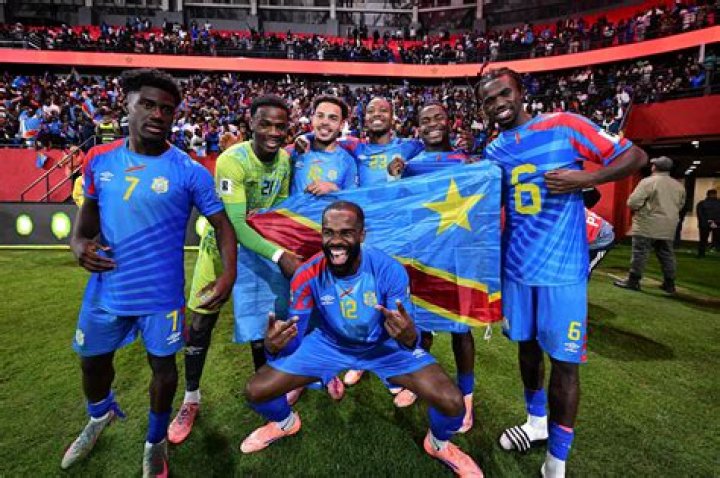
The stage is set, the tension is electric, and the world is watching. Colombia vs DR Congo arrives at the FIFA World Cup 2026 Group K stage as one of the most intriguing inter-continental clashes on the tournament calendar — a meeting of two nations whose recent form paints wildly different pictures, yet whose tactical complexity guarantees a match that will demand every ounce of analytical attention. Official lineups remain locked away, shrouded in the silence of coaching staff deliberations, but the evidence trail left by both sides across their last five matches tells a story loud enough to predict what is coming.
Colombia's Last 5 Matches: A Portrait of a Team Finding Its Rhythm
Strip away the noise, and Colombia's most recent five fixtures reveal a side oscillating between devastating offensive brilliance and uncomfortable defensive fragility — a paradox that their tacticians must resolve before the first whistle sounds against DR Congo.
Match-by-Match Breakdown: Los Cafeteros Under the Microscope
Tracing backward through Colombia's last five confirmed results, the narrative unfolds with gripping unpredictability. Their most recent outing — a 3-1 victory over Costa Rica in an international friendly — was a commanding performance that suggested renewed confidence in front of goal, with the Colombian attack flowing with a fluidity that opponents found almost impossible to contain. The wide channels were exploited relentlessly, and the pressing triggers in the opposition's defensive third were executed with disciplined ferocity.
Before that, Colombia dispatched Jordan 2-0, a clinical and controlled display that reinforced the sense of a team building cohesion at exactly the right moment. The defensive shape was compact, transitions were rapid, and the central midfield partnership functioned as both a shield and a launch pad — precisely the balance elite teams seek heading into a World Cup group stage.
However, the cracks were exposed in their encounter with Croatia, where Colombia fell 1-2 in a match that exposed vulnerabilities in their defensive transition. When pressed high and forced to defend on the back foot, the gaps between Colombia's midfield and defensive line stretched to dangerous distances — a tactical weakness that DR Congo's coaching staff will have noted with considerable interest.
The 1-3 defeat against France was similarly instructive. Against a high-pressing European side with elite individual quality, Colombia found themselves overwhelmed in central areas, with the defensive midfield pivot unable to adequately screen the back four. Yet even in defeat, the attacking third showed promise: rapid combination play, intelligent movement off the ball, and a constant threat from wide positions kept France's defence honest throughout.
Rounding out the five, Colombia's 2-1 victory over New Zealand provided a baseline of reliability — a structured, professional performance against an organised but limited opponent, confirming that when Colombia control tempo and territory, they are a genuinely dangerous proposition at this level.
Colombia's Predicted Formation: The 4-2-3-1 Blueprint
Based on these five matches, Colombia's most likely tactical shape against DR Congo is a 4-2-3-1 formation, built around a deep-lying double pivot in midfield that aims to address the pressing vulnerabilities exposed by Croatia and France. The two holding midfielders will carry the responsibility of managing the defensive transition — cutting passing lanes, winning second balls, and enabling the attacking trio ahead of them to operate with freedom.
The wide forward positions will be Colombia's primary weapons of destruction. Both flanks have consistently served as the entry points for their most dangerous attacking sequences, with overlapping full-backs providing the width and depth necessary to stretch defensive blocks. The central attacking midfielder — operating in the shadow of the lone striker — will be the creative heartbeat, the figure tasked with finding pockets of space between DR Congo's midfield and defensive lines.
In possession, Colombia will likely seek to build through short combinations from the back, drawing the press before releasing vertical passes into the feet of their number ten or into the run channels behind DR Congo's defensive line. Out of possession, expect a mid-block that looks to compress central space before launching rapid counter-attacks through the wide areas — a transition pattern that has proven particularly effective in their recent victories.
DR Congo's Last 5 Matches: The Leopards Arrive Sharpened and Hungry
DR Congo's recent form is nothing short of remarkable — a sequence of results that demands respect and carries with it the unmistakable scent of a team peaking at precisely the right moment. To underestimate the Leopards in this World Cup group stage would be a catastrophic miscalculation.
Match-by-Match Breakdown: The Leopards in Full Stride
DR Congo's last five matches constitute a masterclass in competitive resilience. The most dramatic and telling of these was their extraordinary 5-4 victory over Nigeria in the World Cup CAF Qualifiers — a result that sent shockwaves through African football and announced the Leopards as a team capable of surviving and thriving in the most intense attacking environments. Ten goals in a single match. The defensive fragility was concerning, yet the attacking verve, the refusal to buckle, and the clinical finishing under pressure revealed a squad possessing genuine world-class offensive capability.
Against Cameroon in World Cup CAF qualifying, DR Congo produced a composed and disciplined 1-0 victory — a result that spoke volumes about tactical flexibility. Against the Indomitable Lions, the Leopards sat in an organised defensive structure, absorbed pressure, and executed a clinical counter-attacking strategy with cold efficiency. The contrast with the Nigeria thriller was striking: this was DR Congo showing they possess the tactical intelligence to adapt their approach based on the opponent.
Their 3-0 victory over Botswana in the Africa Cup of Nations Group D stage was an authoritative statement of collective quality — a match where the full range of DR Congo's attacking combinations was on display, with goals coming from different positions and patterns of play, demonstrating a lack of predictability that makes them genuinely difficult to defend against.
The 1-1 draw with Senegal at AFCON was a high-pressure encounter against one of Africa's finest sides, and DR Congo's ability to match Senegal's physicality and technical quality across ninety minutes confirmed their status as a serious force. Their defensive structure in that match was organised and aggressive, with the midfield providing excellent cover and the wide defensive players limiting Senegal's considerable attacking threat.
Completing the five, DR Congo's 1-0 win over Benin at AFCON demonstrated the ability to grind out tight victories when the expansive game is not available — a hallmark of tournament-ready teams that understand how to win ugly when the occasion demands it.
DR Congo's Predicted Formation: The Explosive 4-3-3
DR Congo's tactical evidence across these five matches points strongly toward a 4-3-3 formation — or at times a shape that morphs fluidly between a 4-3-3 and a 4-5-3 defensive block depending on the phase of play. The three-man midfield will be structured with a single defensive anchor and two dynamic box-to-box operators, providing both the physical intensity and the creative platform required to compete against Colombia's technically gifted central players.
The front three is DR Congo's most lethal weapon — and potentially the most terrifying prospect for Colombia's back four. Fast, direct, and capable of explosive individual moments, the Leopards' forward line carries the power to overwhelm full-backs in one-on-one duels and to punish any momentary hesitation in the defensive line with devastating pace in behind. The Nigeria match proved that DR Congo will not shy away from an open, high-scoring contest if that is what the game demands.
Out of possession, DR Congo is expected to press aggressively from the front, particularly targeting Colombia's centre-backs when they attempt to play out from the back — a pressing trigger that has consistently disrupted possession-based teams in their recent fixtures. The wide forwards will set the press, the central trio will close passing lanes, and the back four will hold a high line to compress the available space for Colombia's attacking unit.
Key Player Matchups That Will Decide Colombia vs DR Congo
Beneath the tactical frameworks, beneath the formations and the pressing shapes and the transition patterns, World Cup matches are ultimately decided in the fire of individual duels. Here are the four key player matchups that will define the outcome of this extraordinary Group K encounter.
Colombia's Central Attacking Midfielder vs DR Congo's Defensive Anchor
This is the contest that will determine whether Colombia can unlock DR Congo's defensive structure. Colombia's number ten — the creative pivot around whom their entire attacking system revolves — will be tasked with finding space in the narrow pockets between DR Congo's midfield line and defensive block. Against them stands DR Congo's defensive midfielder, a player whose physical presence and tactical intelligence have been pivotal in providing the defensive foundation upon which the Leopards' attacking explosiveness rests.
If Colombia's playmaker can find the freedom to receive, turn, and distribute in those central zones, the entire DR Congo defensive shape comes under threat. If DR Congo's midfield anchor can deny that freedom — tracking runs, winning duels, and disrupting the timing of Colombia's vertical combinations — then Colombia's attacking system becomes disjointed and predictable. This battle in the hidden spaces of the central third is, arguably, the single most important individual contest on the pitch.
DR Congo's Right Winger vs Colombia's Left Back
DR Congo's recent matches have consistently identified the right flank as their most dangerous attacking corridor. The pace and directness of their wide forward in that position has caused havoc against opposition full-backs throughout their qualifying campaign and AFCON run. Colombia's left back, asked simultaneously to provide attacking width and defensive solidity, will face a ninety-minute examination of their defensive one-on-one capability.
Should DR Congo's winger win this duel consistently — isolating the full-back, winning his one-versus-one battles, and delivering dangerous crosses or cutting inside onto his stronger foot — the pressure on Colombia's central defence will become relentless. Conversely, if Colombia's left back can neutralise the threat and even carry the ball forward in transition, the psychological dynamic of the flank battle shifts decisively in Colombia's favour.
Colombia's Right Winger vs DR Congo's Left Back
The mirror image of the above, and equally decisive. Colombia's wide attacker on the right has been one of their most consistently threatening performers in the recent friendly and qualifying sequence — combining direct dribbling with intelligent movement inside to create overloads in central positions. DR Congo's left back will be required to defend one-on-one repeatedly, to track underlapping and overlapping runs simultaneously, and to maintain positional discipline when Colombia's full-back pushes forward to create a two-versus-one on the flank.
The outcome of this corridor battle carries enormous weight. Colombia's attacking patterns are built in large part on this right-side combination causing damage. If DR Congo can successfully nullify it with a compact defensive block and aggressive pressing from the left winger, the source of Colombia's most reliable offensive output is removed at a stroke.
DR Congo's Forward Line vs Colombia's Centre-Back Partnership
Perhaps the most explosive matchup of them all. DR Congo's front three — whose pace, power, and directness obliterated Nigeria's defence in that jaw-dropping qualifier — will test Colombia's central defensive partnership in ways that few opponents in recent months have managed. Colombia's centre-backs have been defensively dependable against lower-intensity opposition, but have shown vulnerability when forced into high-speed defensive transitions against quick, direct forwards.
DR Congo's forwards will specifically target the space behind Colombia's defensive line when possession is turned over in midfield — the exact transitional moment that caused Colombia problems against both Croatia and France. Should the Colombian double pivot fail to adequately screen the back four in those transitional phases, DR Congo's forward runners will find themselves in behind the defensive line with terrifying frequency. This is the matchup that keeps the Colombia coaching staff awake at night — and with good reason.
The Tactical Verdict: Which System Holds the Edge?
In a match where neither team's official lineup has yet been confirmed, the balance of probability leans toward a contest of contrasting styles that will produce moments of both brilliant organisation and chaotic intensity. Colombia's 4-2-3-1 will seek to control tempo and exploit wide channels in a structured, patient manner. DR Congo's 4-3-3 will look to press high, win the ball in dangerous positions, and launch rapid transitions through a forward line of genuinely frightening quality.
The critical variable is which team's pressing strategy functions more effectively. If DR Congo's front three can disrupt Colombia's build-up and force errors in the defensive third, the Leopards' counter-attacking speed becomes almost unstoppable. If Colombia's double pivot provides adequate protection and the team successfully plays through the press, their creative midfield and wide attacking quality should generate the chances required to win the match.
One thing is certain: on this stage, at this World Cup, Colombia vs DR Congo in Group K is not a match to be filed under predictable outcomes. It is, by every tactical indicator available, a game balanced on the finest of edges — and the team that wins the key individual duels in the central third and the wide corridors will write their name into World Cup 2026 history.
Follow Every Tactical Detail on StreamPitch
For the deepest tactical analysis, live match updates, formation breakdowns, and expert commentary on every FIFA World Cup 2026 fixture, stay locked to StreamPitch at worldcup2026.fsb.gov.ng — your definitive destination for World Cup football intelligence. The Leopards and Los Cafeteros are ready. The tactical battle lines are drawn. Now it begins.
