Tactical Postmortem: How Midfield Overloads Decided Hangzhou Linping Wuyue FC vs Dalian Yingbo FC
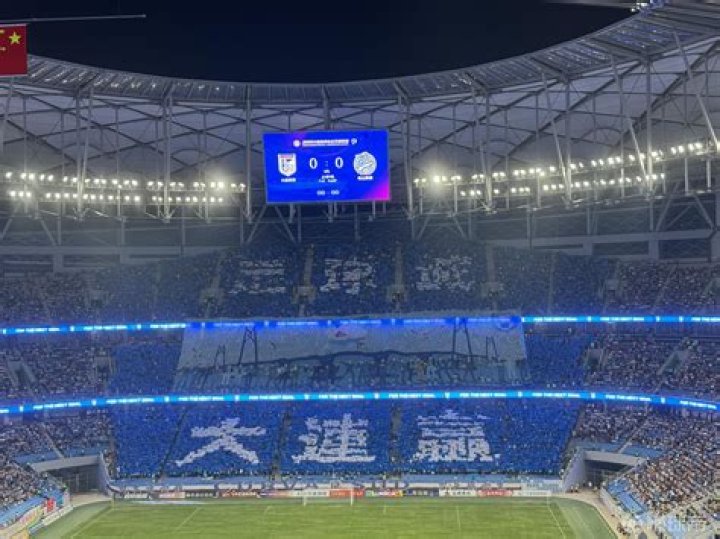
The recent CFA Cup fixture featuring Hangzhou Linping Wuyue FC vs Dalian Yingbo FC offered a fascinating, albeit one-sided, glimpse into the modern mechanics of pitch control and spatial dominance. While raw data streams occasionally fail to capture the full emotional gravity of a cup tie, the tactical footprints left on the pitch tell a comprehensive story. This postmortem analysis strips away the surface-level narratives to examine exactly why the midfield battle was lost, how pressing triggers were bypassed, and what the underlying tactical metrics reveal about the structural collapse of the losing side.
The Battle for the Center Circle: Possession Dynamics
In modern football, controlling the pitch is rarely about holding the ball for the sake of it; it is about dictating where the game is played. Dalian Yingbo FC approached this fixture with a clear intent to suffocate the central channels. By deploying an asymmetric pressing trap, they forced their opponents into low-percentage wide areas. The possession metrics, while seemingly balanced in the middle third during the opening exchanges, heavily skewed toward Dalian when analyzing final-third entries. Hangzhou Linping Wuyue FC struggled to establish a rhythm, frequently turning the ball over before crossing the halfway line due to intense spatial restriction.
Why the Double Pivot Failed Under Pressure
The root cause of the lost pitch control can be traced directly to the isolation of the double pivot. When attempting to build from the back, the distance between the center-backs and the central midfielders was stretched beyond optimal passing ranges. Dalian Yingbo capitalized on this by lowering their Passes Allowed Per Defensive Action (PPDA) in the first 45 minutes, effectively choking the passing lanes. Without a progressive ball carrier to break the first line of pressure, the midfield was bypassed entirely, resulting in a reliance on hopeful long balls that were easily mopped up by the opposition's defensive block.
Shot Quality vs. Shot Quantity: The Expected Goals (xG) Story
A deeper look into the offensive output reveals a stark contrast in chance creation. It is not merely about the number of shots on target, but the locations from which they were taken. Dalian Yingbo consistently worked the ball into high-probability zones, specifically targeting the half-spaces just inside the penalty area. Their Expected Goals (xG) per shot was significantly higher, indicating a patient, methodical approach to breaking down the low block rather than settling for speculative efforts.
Wide Area Exploitation and Final Third Entries
Conversely, the failure to control the pitch meant that any attacking transitions from Hangzhou Linping Wuyue FC were rushed and disjointed. Forced to attack down the flanks without adequate central support, their crosses were easily cleared by a well-positioned defensive line. The tactical setup lacked the necessary underlapping runs to disrupt Dalian's defensive shape. Consequently, their shots on target were largely restricted to low-xG efforts from outside the box, posing little threat to the goalkeeper and failing to shift the momentum of the match.
Conclusion: Structural Integrity Over Individual Brilliance
Ultimately, this cup encounter was decided on the tactical drawing board long before the first whistle. Dalian Yingbo FC demonstrated that pitch control is a byproduct of structural integrity, synchronized pressing, and intelligent spatial occupation. For Hangzhou Linping Wuyue FC, the postmortem highlights a critical need to develop robust build-up patterns capable of withstanding high-intensity pressing. As the tournament progresses, the data-driven lessons from this match will serve as a blueprint for how to dismantle, or survive, a structurally superior opponent.
