Guangxi Hengchen FC vs Shandong Taishan Lineup Impact: How Formations Shaped the CFA Cup Showdown
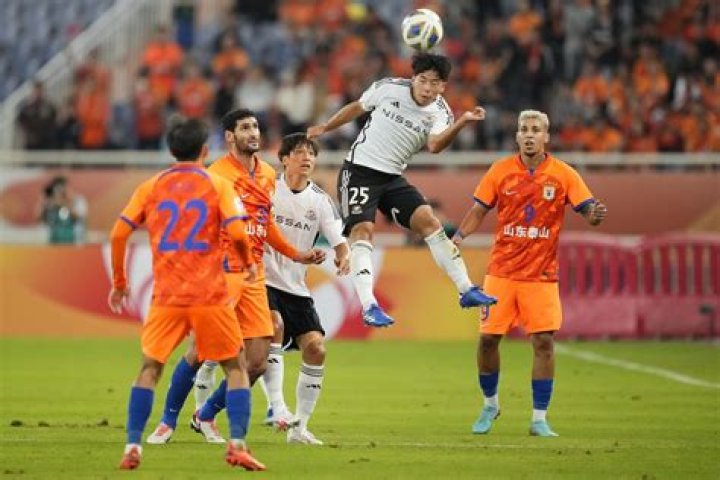
Guangxi Hengchen FC vs Shandong Taishan delivered one of the most tactically absorbing encounters of the CFA Cup 2026, a fixture where the battle was not merely decided on the pitch — it was decided in the dugout, on the training ground, and in the merciless calculus of formation design. Two coaches. Two squads. One framework mirrored almost identically. Yet what unfolded was anything but identical. This is the story of how eleven names etched onto a teamsheet became the blueprint for chaos, control, and ultimate consequence.
The Twin Blueprints: A Mirror Image Destined to Collide
When the confirmed lineups for this CFA Cup clash were revealed, a single, striking reality emerged immediately — both JunWei Liu, mastermind behind Guangxi Hengchen FC, and Peng Han, the architect steering Shandong Taishan, arrived at the same structural conclusion: the 4-2-3-1. On paper, it was symmetry. On grass, it was a powder keg.
The 4-2-3-1 is a formation of duality — equal parts defensive pragmatism and attacking ambition. It demands relentless discipline from the double pivot and supreme intelligence from the attacking midfield trio sitting just behind a lone striker. When two teams adopt the same shape, the contest collapses into a war of individual quality, pressing intensity, and — most critically — in-game tactical adjustments. Every substitution becomes magnified. Every positional shift carries the weight of consequence.
Guangxi Hengchen FC: JunWei Liu's Starting Eleven Under the Microscope
The Last Line — B. Shen Behind the Curtain of Pressure
Between the sticks for the home side, goalkeeper B. Shen (No. 22) carried the solitary, suffocating burden of a last-ditch guardian. In a mirror-formation battle where midfield transitions can ignite danger with terrifying speed, the role of the goalkeeper extends far beyond shot-stopping — ball distribution under pressure becomes a weapon or a liability. Shen's positioning and composure in those razor-thin moments shaped how aggressively Hengchen's backline could press.
The Defensive Spine — Authority, Discipline, and a Captain's Heartbeat
The four-man defensive line assembled by Liu was anchored by captain Y. Xiucheng (No. 3) — the armband no mere decoration but a declaration of leadership expected to radiate from the centre of that back four. Flanking the captain were L. Jiaqiang (No. 2) and H. Luan (No. 5), with the shape completed by an outer body providing width and recovery discipline. This defensive unit was constructed not simply to repel, but to launch — to be the first breath of every attacking sequence through composed distribution under duress.
The Double Pivot — The Heartbeat of Hengchen's Design
The twin anchors of Guangxi Hengchen's midfield engine room, X. Ji (No. 24) and L. Khedrup (No. 23), bore the crushing responsibility that every 4-2-3-1 places upon its double pivot. In a clash where Shandong Taishan deployed the identical structure, these two players faced their direct ideological counterparts. Their ability to screen the backline, recycle possession, and press high enough to disrupt Taishan's creative midfield trio was the invisible contest within the contest — the one that television cameras rarely capture but which ultimately defines every passage of play.
The Creative Trident — Lapoussin, D. Chen, and the Wildcard of Y. Liang
It was within the attacking midfield band that Guangxi Hengchen's most audacious selections emerged. L. Lapoussin (No. 11) — a name that carries the unmistakable weight of a naturalised foreign recruit deployed as a domestic asset — occupied the left channel with the directness and cunning that only experience beyond Chinese shores can imprint onto a footballer. Beside him, D. Chen (No. 7) operated in a roaming capacity through the interior, while the energetic Y. Liang (No. 44) completed the trio, tasked with connecting midfield phases to the lone striker in devastating bursts.
And K. Ren (No. 25), listed as a midfielder in the starting XI, offered a dimension of versatility — capable of tucking into the double pivot structure or drifting wider — a tactical wrinkle that Liu built into the blueprint deliberately.
The Spearhead — N. Mbo's Lone Striker Mandate
Perched at the summit of this formation, N. Mbo (No. 36) received the ultimate assignment handed to any lone striker: hold the line, link the play, and when the moment of rupture arrives — be clinical. Another naturalised presence in the Hengchen squad, Mbo's physicality and movement off the ball were central to whether Guangxi's structured build-up play could pierce Taishan's similarly organised defensive block. A striker in this role does not simply score goals — he exhausts centre-backs, creates space for the drifting midfielders, and manufactures the chaos that a well-drilled 4-2-3-1 desperately craves.
Shandong Taishan: Peng Han's Calculated Gamble Examined
D. Wang in Goal — The Quiet General of Taishan's Rearguard
Shandong Taishan handed the gloves to D. Wang (No. 14), a selection that immediately signalled Peng Han's preference for a goalkeeper capable not just of saving, but of organising. With the exact same 4-2-3-1 pressing down from the opposite end, Wang's ability to read forward passes, command his area on set pieces, and distribute precisely became the quiet foundation upon which Taishan's entire counter-pressing strategy rested.
Taishan's Defensive Block — Zheng, Wang and the Art of Holding the Line
T. Wang (No. 6) and Z. Zheng (No. 5) formed the central defensive partnership for Taishan, a pairing charged with containing the physical menace of N. Mbo at one end and providing the launchpad for Taishan's own transitions at the other. In a tactical battle defined by narrow midfield corridors and rapid vertical passes, the composure of this central pair when stepping into Guangxi's half carried extraordinary significance.
The Engine Room — Huang, Madruga, and the Axis of Control
Perhaps the most riveting tactical subplot of this CFA Cup encounter resided in Shandong Taishan's central midfield pairing. Z. Huang (No. 35) and G. Madruga (No. 8) — another naturalised talent inserted into the heart of Taishan's structure — formed a double pivot of contrasting qualities. Where Huang represented the local intelligence and positional discipline, Madruga injected the unpredictability of a footballer conditioned in South American football's more instinctive, improvisational school. Together, they were tasked with suffocating Hengchen's own double pivot and asserting dominance in the territorial battle that defines who controls a 4-2-3-1 mirror match.
The Attacking Band — Memet, Duan, and Qazaishvili's Dangerous Craft
Behind the lone striker, Shandong Taishan unleashed their most technically gifted personnel. I. Memet (No. 38) and L. Duan (No. 24) flanked the central attacking midfielder M. Mijiti (No. 28), creating a trident of pace, technical skill, and intelligent movement. But the name that generated the most pre-match anticipation was undoubtedly V. Qazaishvili (No. 10) — the Georgian international naturalised into the Chinese football system, whose ability to ghost between lines and manufacture danger from apparent nothingness represented a singular threat that Guangxi's double pivot would have spent considerable time pre-match scheming to neutralise.
Zeca — The Point of the Spear
Leading Taishan's attacking line was Zeca (No. 19), a forward whose name reverberates through the history of naturalised talent deployed within Chinese domestic football. His movement — restless, intelligent, and relentlessly physical — pressed against Guangxi's central defenders from the opening whistle, demanding constant attention and creating the attacking corridors that Qazaishvili and the midfield trio behind him were primed to exploit.
Formation Impact: Where the 4-2-3-1 Mirror Cracked Under Pressure
In the collision of two identical formations, the decisive battle was always going to be fought in the seams — the narrow spaces between the lines where the superiority of individual decision-making separates teams of equal tactical structure. Both coaches built their teams to press high, transition quickly, and suffocate the opponent's double pivot before chances could be created. The result was a match governed by controlled aggression and punctuated by sudden, explosive transitions.
Guangxi Hengchen's defensive solidity, anchored by captain Xiucheng and the disciplined screen of Ji and Khedrup, held firm against the relentless probing of Qazaishvili and the wide movement of Memet. Meanwhile, Hengchen's attacking trio — led by the direct running of Lapoussin — forced Taishan's central defenders into repeated reactive positioning rather than the proactive defensive organisation they preferred.
Taishan's Madruga, however, proved to be the formation's most disruptive agent — his ability to drift beyond the traditional double pivot boundaries into deeper zones confused Hengchen's pressing triggers and created passing lanes that Taishan's attacking band exploited with clinical efficiency.
The Substitutes Who Rewrote the Narrative
Guangxi Hengchen's Bench Intervention
JunWei Liu constructed a substitute bench that whispered of every tactical eventuality. The introduction possibilities ranged widely: the creative disruption of C. Guanjian (No. 6) in midfield, the fresh attacking energy of Y. Yu (No. 12), the defensive solidity of Z. Zhang (No. 17) and L. Cen (No. 19) for moments requiring the backline to be reinforced, and the wide midfield dynamism of S. Ablimit (No. 28) to stretch Taishan's defensive lines when fatigue inevitably set in. The potential introduction of C. Wei (No. 18) in the engine room signalled Liu's readiness to inject greater pressing intensity and technical fluency if Hengchen's first-choice pivot began to be overrun by Madruga's roaming influence.
Most intriguingly, the attacking forward Y. Yu represented a high-risk, high-reward option — a different profile to Mbo that could have destabilised Taishan's centre-back partnership by introducing pace in behind rather than physicality in the channel.
Shandong Taishan's Game-Changing Reinforcements
Peng Han's bench selections revealed a coach who had mapped every possible avenue of the match with meticulous precision. The introduction of R. Merkies (No. 17) from the bench as a forward option would have dramatically shifted Taishan's attacking dimension — where Zeca operated with intelligent link-play and positional cleverness, Merkies represented directness, aerial presence, and the kind of relentless running that exhausted defenders struggle to track in the final quarter of a cup tie. His potential introduction was the embodiment of a tactical time bomb ticking quietly on Taishan's bench.
X. Wenneng (No. 7) offered Taishan a wide midfield alternative capable of stretching Guangxi's backline with pace and 1v1 ability, while L. Junwei (No. 41) and P. Yixiang (No. 42) — both listed as forwards — gave Han the luxury of an attacking triple-substitution option that could completely rewrite Taishan's offensive structure from a possession-based system into a direct, relentless assault on Hengchen's increasingly stretched defence. The reserve goalkeeping options of Y. Jinyong (No. 1) and Q. Liu (No. 36) rounded out a bench that balanced tactical breadth with positional security.
The Verdict: Formations Set the Stage, Substitutions Wrote the Ending
What this CFA Cup encounter between Guangxi Hengchen FC and Shandong Taishan ultimately demonstrated is a footballing truth as old as the formation board itself — when two coaches choose the same structural weapon, victory belongs not to the one who draws the better blueprint, but to the one who reads the match most accurately when the blueprint begins to crack. JunWei Liu's Hengchen operated through the collective discipline of their defensive structure and the individual brilliance of naturalised talents Lapoussin and Mbo. Peng Han's Taishan countered with the dynamic unpredictability of Madruga and the sharp intelligence of Qazaishvili — two players capable of making the 4-2-3-1 feel less like a system and more like a living, breathing organism that could reshape itself with every touch.
The formations were the opening sentence of a story. The substitutions — the calculated gambles made in moments of pressure, fatigue, and tactical desperation — were its electrifying final chapter. In the CFA Cup 2026, that final chapter was the one that mattered most.
